

Good and Bad - The Two Words That Changed How I Think About Work
Published on Fri May 29 2026

First, a little about me
I joined Tattle in December 2024 as an intern. Three months later, in February 2025, my internship converted into a full-time role and I have been here ever since as a Junior Software Developer.
During my internship, I was given the book The Nature of Code to read and practice from. I also worked on Tattle's community page. Those three months were quieter than I expected - not because the team was cold, but because I was. I barely spoke in meetings.
A big reason was language. Everyone at Tattle spoke in English, and my confidence was low. I understood things, but expressing myself felt hard. So I stayed quiet even when I had something to say. But even then, my immediate team kept me informed. Every update, every context, they made sure I had it. My messages always got a quick reply. Nobody made me feel invisible just because I was an intern who didn't talk much.
I remember there were moments in meetings where the conversation would move fast and I would lose the thread. I wanted to say something but by the time I had found the words, the moment had passed. What I noticed over time was that the team was aware of this. They would slow down, check in, or switch to Hindi when needed - not making a big deal of it, just quietly making room. That small thing made a bigger difference than I think they realised.
What working at Tattle is like
When I moved into the full-time role, I started fixing bugs on the website and raising PRs. My GitHub skills genuinely improved through that process. More recently, I have been writing updated blog posts for Tattle's current project.
Writing for Tattle meant I also had to improve my English, which I hadn't expected. The team arranged an English teacher for us. And in our in-person meetings, something small but important happened - the team was conscious about how they spoke so that Hindi-speaking members like me could also participate. They would switch to Hindi when needed, slow down, or check in to make sure we were following. That one adjustment meant I slowly started speaking up in meetings – in English. Even when I made mistakes, nobody made it awkward.
We work remotely most of the time but we have a few in-person meetings where we meet each other and discuss our work. In my time at Tattle, I have attended two in-person meetings in Rishikesh. During the in-person sprint I really understood how much the language barrier had been holding me back and how intentionally the team was working around it.
A moment I won't forget
There was a phase, not long after I joined full-time, where I was going through something difficult and my work was getting delayed because of it. I wasn't able to show up the way I wanted to. I genuinely thought I might be asked to leave.
Instead, someone sat down with me and asked what was going on. They actually listened and helped me figure out a way forward. No lecture. No warning. Just: what's happening, and how can we fix it together?
When I talk about this with my friends outside work, I always feel this quiet gratitude, that I found a place where I can learn at my own pace, work on things I care about, and be supported when things get hard. That conversation was the moment I stopped feeling like I was just passing through and started feeling like I actually belonged here.
Three meetings a week and how they always begin
Our weekly rhythm is built around three meetings. Monday is for planning - the team leads present the projects for the week, what we are doing and how. Wednesday is a check-in on progress. And Friday wraps up the week.
But what I actually want to talk about is not the agenda. It is how every single one of these meetings begins with something we call Good and Bad.
Before any work discussion starts - every Monday, every Wednesday, every Friday, each team member shares one good thing and one bad thing from their life. Not from work. From life. It takes maybe ten minutes. And it changes the whole energy of everything that follows.
What Good and Bad actually looks like
The rule is simple, each person shares something that made them happy and something that didn't go well. It has nothing to do with work. No project updates, no blockers, no deadlines. Just whatever is going on in their life that week.
Honestly, when I first started doing Good and Bad, I would share work updates because I thought that's what a meeting was for. Then someone gently told me: no, this is just normal life stuff, nothing work related. That was a little surprising to me. I had heard of concepts like strengths and weaknesses before but Good and Bad was completely new. The idea that we would just start a meeting by talking about our regular lives. I didn't know that was even a thing.
And once I understood that, it became my favourite part of the week.
Here are two real examples from my own Good and Bad.
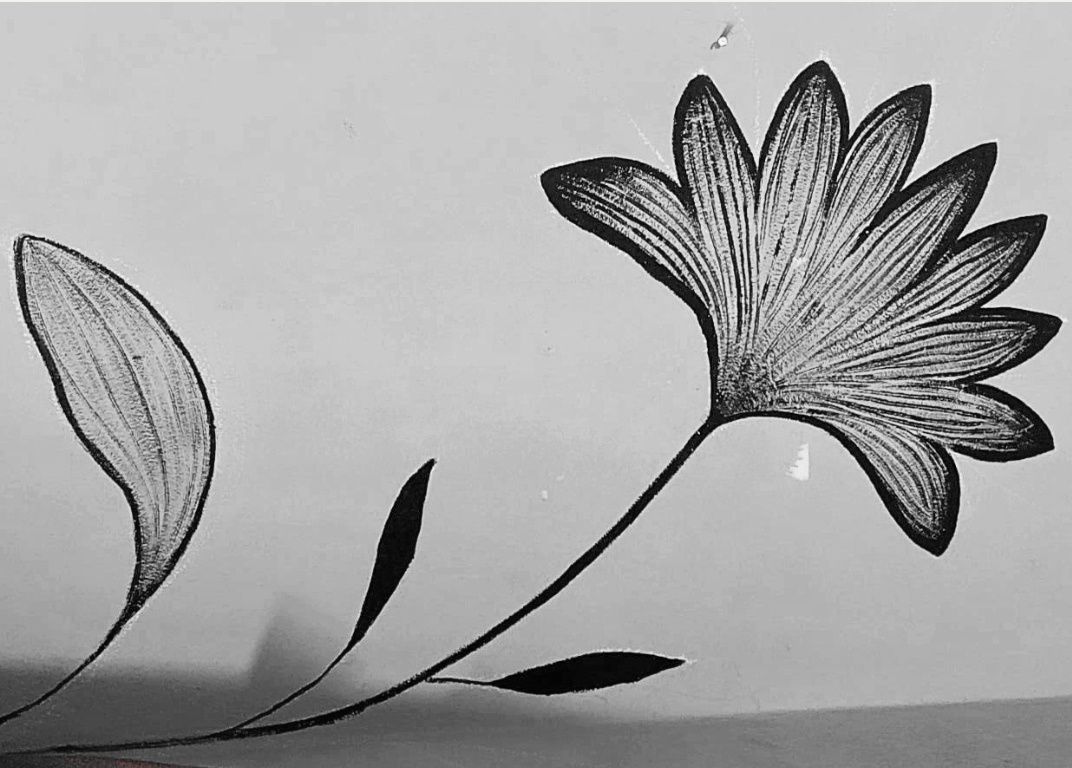
My Good: "This weekend I went to watch a movie with my friends. It was really lovely and I also painted a beautiful wall painting."
My Bad: "Yesterday I was going to university and my train left the platform just as we reached it. We were running and then the TT actually stopped the train for us."
The bad one ended up being funny in the retelling. Everyone laughed at the image of us sprinting across the platform, and the TT somehow stopping the train. That is the thing about Good and Bad. It is not heavy. It is just people sharing the small joys and small disasters that make up a real week.
And there is this one team member whose Good always makes me laugh. She once said her Good was that she had gone to shake a ber tree and fallen off it in the process and she was saying it like it was a completely normal thing that happened to her. Everyone lost it.
"Kal maine panipuri khayi" is also a completely valid Good.
What this does over time is hard to explain until you have felt it. You start knowing people, not just their work but their life. Sometimes everyone's Good ends up being about the same thing - food, or the weather and that becomes its own little conversation. Someone mentions a book they read in their Good, and someone else gets curious and starts reading it too, and then they are talking about it for the next two weeks. You find out that someone paints, someone is into storytelling, someone has a whole skill you never knew about and it came up because of a ten-minute ritual at the start of a meeting.
It makes it very easy to just talk to people. I don't have to think about how to start a conversation because I already know what is going on in their life.
Weekly 1-1
There is a weekly check-in where we meet one-on-one with our mentor. It is not a performance review. It is more like: how is it going, what do you need, what is on your mind.
A recent example - I wanted to know how I was doing. Not in a vague way but actually: what does the team think of my work, and are there projects coming up that match what I am interested in. I told my mentor both of these things. We talked it through and I got my performance feedback, and also got guidance on the direction I wanted to go in.
Another time, we mentioned that English was a problem for us. I could understand it but I could not speak it confidently. It felt like a personal thing, not really a work problem. But my mentor took it to the team anyway and they arranged an English teacher for us. I did not expect that. It was not something I asked to be fixed. I just said it out loud and someone made sure it got addressed.
That is what 1-1 feels like. A place where I can say something honestly and trust that it will be heard.
Why I wanted to write this
I started at Tattle barely speaking in meetings. English felt like a wall. I went through a phase where I thought I would be let go and somewhere in between all of that, I found myself actually looking forward to Monday mornings because I knew we would start with Good and Bad, and I would get to hear what everyone had been up to.
Tattle's work - understanding misinformation, connecting it to what people around us actually experience is something I have grown to genuinely care about. But what made me care about the work was first feeling cared for as a person.
If your team already does something like this - hold onto it. It is rarer than you think.
And if you want to build something like this - you don't need a big plan. Start with ten minutes at the top of every meeting. Ask people how they are doing. And actually listen to the answer.